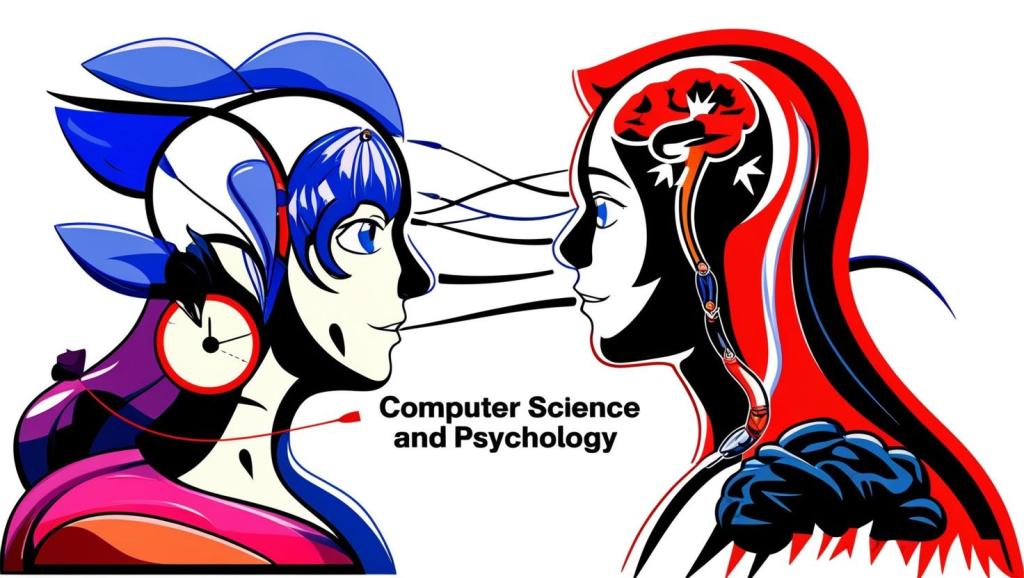
Introduction
As Billy Cox once said, “Technology should improve your life… not become your life.” It is not a secret that technology is developing rapidly daily, including appliances, vehicles, the internet, phones, and more. However, it would seem that as our technology grows, humanity’s mental health declines. According to the National Alliance on Mental Health, “22.8% of U.S. adults experienced mental illness in 2021 (57.8 million people). This represents 1 in 5 adults” (NAMI, 2023). This does not include children and teenagers, nor other countries that are impacted by mental illnesses.
Additionally, many individuals do not know where or how to reach out for help because resources and information are limited. NAMI also states, “25+ Million rural Americans live in a Mental Health Professional Shortage Area, where there are too few providers to meet demand” (NAMI, 2023). “Technology can bridge the gap of limited access to resources, providing better care for those who struggle with mental health” (Grasso, 2024). Understandably, these statistics are alarming, so how can we use technology combined with psychology to bring more social understanding, awareness, and resources to the healthcare profession? By thinking outside of the box and utilizing the tools and technology, we have to build programs and systems that can truly impact the healthcare industry as a whole.

There are several problems within the healthcare industry, including a lack of effective communication between professionals and clients, funding problems for both professionals and clients and a lack of empathy, which leads to caregiver burnout. All of these contribute to a disconnect between clients and professionals that negatively impact treatment. This essay will touch on the problems we face within the healthcare industry, propose solutions, and discuss the direction in which computer science and psychology are headed in the future.
Research of Problems We Face: Caregiver Burnout, Lack of Effective Communication, and Funding
One primary concern within the healthcare industry is caregiver burnout. Caregiver burnout occurs when there is a lack of concern for a patient’s well-being, leading the caregiver to abuse a patient, ignore a patient’s needs, and decrease the quality of caregiving usually given to patients. An example from November 2017 is a news article from the DailyMail who wrote an article that displayed a video of a caregiver abusing a fourteen-year-old patient from Hillcrest Behavioral Hospital; it states, “The video then shows Doughty walking towards Vice with his finger in the air before bringing both of his hands around Vice’s neck and slamming him into the wall” (Miller, 2017). The caregiver, Issac Doughty, is a staff member who went into the healthcare system and was ready to help teens with mental health struggles.

However, as time went by, the stresses of having to deal with disrespectful, violent, and, in general, hard-to-handle patients wore Issac down, and he sub came to caregiver burnout. The textbook Social Psychology states, “Sometimes the power of a social situation leads us to act contrary to our expressed attitudes. Indeed, powerfully evil situations sometimes overwhelm good intentions, inducing people to accept falsehoods or comply with cruelty” (Myers & Twenge, 2021, p.6), which was the case for Issac. As you can see, caregiver burnout is real, and it can affect even those who initially started with good intentions. Caregivers can start to dehumanize patients in mental hospitals and treat them unjustly.
John Schumaker states in his book, “Some thinkers consider the condition of dehumanization to be the equivalent of madness and the most significant contributor to the current crisis of identity. Erich Fromm wrote about the modern mental health crisis in terms of the gap between culture and human nature. It was the dehumanization stemming from the human-nature gap that helped him to understand the deteriorating psychological health of the modern person and that led him to write that we are a society of notoriously unhappy, lonely, anxious, depressed, and dependent people who are glad when we have killed the time we are trying to save” (Schumaker, 2001).
Unfortunately, this is not something new. This phenomenon has happened throughout history and is a common theme within the healthcare profession, especially regarding institutions for the mentally unstable. It is time to find solutions for caregivers so patients can receive the care they need instead of additional trauma.
Another issue within the healthcare industry is a lack of effective communication between professionals and their clients. There is a social disconnect that stems from the inability to understand one another fully. How can someone truly understand what someone else is going through if they have not personally gone through it themselves? Reading and diagnosing symptoms is one thing, but genuinely understanding where a patient is coming from is entirely different.

A recent study on communication needs in the mental health industry states, “Barriers to accessing talking therapies were the second subtheme. Knowledge around diagnosis was construed as relating directly to providing appropriate interventions for this population, particularly regarding talking therapies. Traditional talking therapies were interpreted as being potentially inaccessible and inflexible for individuals presenting with SLCN and mental health difficulties, particularly if language difficulties were unidentified. SLTs and some mental health professional participants viewed psychological therapies as language-heavy, involving higher-level language and concepts that CYP with SLCN would struggle to comprehend and verbalize” (Hancock et al.; M., 2023). The language used in professional settings like therapy offices may not reach individuals who struggle with certain mental illnesses. This can cause miscommunications and misdiagnoses within therapeutic settings.
Lastly, people are not able to afford treatment, and low-income families who have Medicaid are often turned away from healthcare providers, which means fewer opportunities to receive help for low-income families and people experiencing homelessness.
Furthermore, Richard Layard points out, “People who have a mental illness are less likely to be in work and, if in work, are more likely to be out sick or working below par” (Layard, 2017). This furthers the issue of not being able to afford therapy, medication, and other types of mental health help. It also causes problems within the economy due to the working class having to pay more in taxes. This adds to the stigma of mental illnesses and causes strife between the working class and those who need additional help.
Furthermore, when it comes to funding for the mental health field, it was found that there was a “Lack of a common framework. Perhaps somehow related to stigma is a lack of knowledge or a unified vision of the field. Even among the leading funders, there is not a common framework for understanding mental health and mental illness or the relationship of mental health to general health; nor is there widespread knowledge about effective treatments” (Brousseau et al., A. D., 2009). Without a framework to direct the funds more efficiently, we are potentially wasting millions of dollars that could be used in different areas in the mental health field.
Analysis and Proposed Solutions: Merging Computer Science and Psychology to Bridge the Gaps
In the past, we have created many wonderful tools with the help of technology to help advance the healthcare system. Items such as mobile applications that can track our health, sleeping patterns, and stress levels have continued to advance. Furthermore, telehealth for clients who cannot make it to traditional therapy offices, digital management systems that help professionals keep client data safe, and the machines that scan the human body have all helped advance the healthcare industry. We can continue to build upon these incredible advancements by introducing innovative ideas, especially within the mental health industry.

One idea is to create more programs and resources for caregivers who are collaborating with complex patients. As stated above, there are plenty of resources for those who struggle with mental illnesses; there is a lack of awareness and access. However, there is a lack of resources for caregivers. By focusing on the caregivers’ well-being, we indirectly focus on the well-being of the clients they are providing care for.
John Schumaker states that “a number of changes are necessary if our goal is to have a new mental health worker with sufficient vision and cultural competence to function in the global community. Training programs in psychology must make culture a central aspect of the curriculum. Rather than continuing to encourage cultural detachment, they need to introduce a number of culture-related courses.
Psychology must strive toward a new relevance in the form of culturally sensitive research that asks questions about more significant social problems, such as drug addiction, religious conflict, overpopulation, child abuse, alienation, under socialization, and technology-related problems. It must embark on a course that will completely revise its ideas, policies, and institutional practices. The roles of the mental health worker that emerge from this transition will depart radically from those in place at the moment” (Schumaker, 2001). By encouraging a collectivist mindset for mental health workers, we equip them with skills to be able to collaborate with patients rather than against them.
The programs can be accessed through onsite computers, where a caregiver would go through the proper training, and data is collected and analyzed by the hiring team; if there is an area that needs to be worked on, someone who is in upper management can address and help the caregiver in specific areas. These programs can be introduced as a part of orientation. After orientation, there needs to be a monthly check-in to ensure the caregiver has all the necessary resources to continue to provide quality care and to check in mentally. Additionally, there could be an anonymous venting system where people can vent their frustrations about the industry. This can help improve industry care and lessen the impact of caregiver burnout.
Another idea is using virtual technology to simulate mental illnesses to put healthcare providers in the shoes of the patients. If doctors can hypothetically put themselves in the shoes of their patients, there could be a breakthrough in understanding between doctors and patients, especially within the mental health industry. We have machines that can see the inside of our bodies. Creating a system that could potentially see within the minds of others could bring in more compassion, understanding, empathy, and overall better treatment.
In regard to the funding problem, we need to start with the framework first and fill in the gaps within funding. Redirecting funding to help individuals regain their lives could not only improve the mental health crisis, but it could also improve the economy. Richard Layard states, “Making treatment available can help distressed people stay in work. Moreover, for people out of work, treatment can help them get back to work by giving them psychological strength and confidence to face the labor market” (Layard, 2017). Making treatment accessible and affordable can help improve the quality of care within the mental health industry, which will directly positively impact the economy. We can make treatment more accessible by utilizing telehealth, improving internet connections in rural areas, building community centers that prioritize mental health, and providing free access to telehealth services through non-profit organizations.
My Position and Implications: A Better Future

As someone who has spent five years in behavioral health hospitals dealing with trauma in harmful ways, I hold a strong position on the need for improvement within the healthcare system, especially regarding those in the mental health profession. The current data and information point us toward the need for solutions for better outcomes for patients and professionals alike. By merging computer science and psychology, we can begin to bring better outcomes to the healthcare system as a whole, which is why I have dedicated my career path towards helping healthcare professionals and patients connect on a deeper level by creating virtual reality simulations of mental illnesses.
If no action is taken on these social problems within the healthcare industry, the problem will only grow worse. History repeats itself often, and when we do not learn from our mistakes, the same patterns will appear. Throughout history, abuse in the healthcare system has prevailed.
The news article from above was about a staff member I personally know. I was there when he first started as a mental health worker. He was helpful and guiding, but over the years, the profession wore him down. It was shocking to see him on the news for patient abuse. I genuinely believe that if we focus on the quality of care for caregivers, we will indirectly help clients and patients, which will improve the healthcare system as a whole.
Additionally, by creating software programs where we put professionals in the shoes of their clients, we can connect patients and professionals on a deeper level to improve treatment. Lastly, if we do not tackle the funding issue, then we will continue to waste millions of dollars instead of directing the funds towards things we genuinely need. It is time to reform the healthcare system as a whole and bring tangible improvements for professionals and clients.
Conclusion
In conclusion, by focusing on caregivers and bringing in more understanding through the use of technology like tailored programs and virtual reality simulations, we can begin to impact the healthcare industry in ways that will benefit both clients and healthcare professionals by allowing them to understand each other on a deeper social level. One area where we may run into problems is funding. However, with a proper framework and awareness, we can overcome this roadblock and help those who need it the most. Together, we can continue to bring in a better future that can positively impact the world.
References
Brousseau, R. T., & Hyman, A. D. (2009). What do we really know about foundations’ funding of mental health? Health Affairs, 28(4), 1210-4. doi:https://doi.org/10.1377/hlthaff.28.4.1210
Dailymail.com, A. M. F. (2017, November 13). Shocking videos show staff viciously abusing patients at one of America’s largest for-profit psychiatric hospitals. Daily Mail Online. https://www.dailymail.co.uk/news/article-5073807/Shocking-video-shows-staff-viciously-abusing-patients.html
Myers, D., & Twenge, J. (2021). Social Psychology (14th ed.). McGraw-Hill Higher Education (US). https://yuzu.vitalsource.com/books/9781260888522
Hancock, A., Northcott, S., Hobson, H., & Clarke, M. (2023). Speech, language and communication needs and mental health: the experiences of speech and language therapists and mental health professionals. International Journal of Language & Communication Disorders, 58(1), 52–66. https://doi.org/10.1111/1460-6984.12767
Layard, R. The economics of mental health. IZA World of Labor 2017: 321 doi: 10.15185/izawol.32
Mental health by the numbers. NAMI. (2024, February 12). https://www.nami.org/about-mental-illness/mental-health-by-the-numbers/
Schumaker, J. F. (2001). The age of insanity: Modernity and mental health. Bloomsbury Publishing USA.


 Motivational Coping & Healing
Thoughts, Debates, Related Stories? Comment below :)